
Gliomas (GB) account for nearly 50% of brain tumors. Numerous genetic alterations responsible for their development have been identified. The most frequently mentioned are mutations and overexpression of receptor tyrosine kinases, such as EGFR, as well as alterations in the RAS/MAPK signaling pathway and the PI3K/AKT/mTOR pathway, which regulate cell proliferation and apoptosis. Depending on the stage of tumor progression, the treatment of GB is based on surgical resection, optionally combined with chemotherapy and radiotherapy. In recent years, the development of targeted therapies has been observed. However, the use of selective kinase inhibitors has proven to be largely ineffective at the clinical trial stage. The mechanistic target of rapamycin (mTOR) drives several physiological and pathological cellular processes and is frequently deregulated in various types of cancer, including glioblastoma multiforme (GBM). To date, no attempts to target this pathway using kinase inhibitors have improved treatment outcomes for patients with GBM.
Serotonin (5-HT) is considered a growth factor for several types of cancer cells. It has been shown to stimulate the proliferation, migration, and invasion of glioma cells. In contrast to other serotonin receptors, the expression of 5-HT6R is restricted to the central nervous system. Depending on time and subcellular localization, this receptor may engage different signaling pathways. 5-HT6R modulates various key developmental targets, such as mTOR. Constitutively active 5-HT6R contributes to increased mTOR activity in the brain. In the present project, the use of 5-HT6R ligands is proposed as indirect modulators of the mTOR and CDK-5 kinases. In contrast to existing approaches in glioma pharmacotherapy, these compounds combine the inhibition of signaling pathways associated with glioma growth with a reduction in serotonin levels in the tumor microenvironment.
The aim of the project is to increase the commercialization potential of basic research conducted at the Cracow University of Technology within the NCN Preludium project entitled “New ligands of the 5-HT6R receptor from the group of sulfonamide derivatives of cyclic arylguanidines in the treatment of glioblastoma multiforme.” As part of the Proof of Concept (PoC) activities, optimization of the synthesis methods for selected molecules is planned, using sonochemically or microwave-assisted synthesis, as well as a detailed evaluation of the anticancer potential of 5-HT6R ligands in selected glioma cell lines in vitro. The main objective of the project is to confirm the antineoplastic activity of the developed compounds, using, among others, a 3D research model which, according to the literature, is considered to closely resemble the in vivo tumor microenvironment. It is planned to obtain biological material from patients diagnosed with GB through cooperation with the Medical University of Łódź and to perform in vitro tests using the acquired cell lines. The potential of the compounds to inhibit proliferation, migration, and invasion, as well as to promote apoptosis, will be evaluated. The compounds intended for biological studies will partly originate from the previously conducted Preludium project and will partly be modified following in silico analyses. This approach aims to potentially increase their modulatory capacity toward selected signaling pathways and to improve penetration of the blood–brain barrier. The outcome of the project will be compounds with confirmed anticancer activity against GB at the early preclinical research stage. In addition, their synthesis methods will be optimized, and their release profile and impurity profile will be characterized. The project is carried out with advisory support from the commercial entities Farmina sp. z o.o. and AT Analytica Prosta Spółka Akcyjna.
As part of the project, eight molecules with high affinity for serotonin receptors were selected and subsequently subjected to detailed analysis of their anticancer activity in vitro. Three of the investigated compounds originated from the previously completed Preludium project carried out at the Cracow University of Technology. Five new ligands were designed based on earlier results, supported by molecular modeling methods.
One of the outcomes of the PoC project is the development of a new, solvent-free method for the synthesis of these molecules, conducted under sonochemical conditions. Despite the absence of a solvent, liquefaction of the reagents in the reaction environment enables the effective use of ultrasound as a medium for energy transfer to the system. Application of the developed method allowed the products to be obtained with high yields ranging from 64% to 87%, with reaction times of less than 2 hours. In vitro studies were performed using both commercial glioma cell lines and cells isolated from oncological patients, in cooperation with the Medical University of Łódź. The tested compounds exhibited high anticancer activity. Two of them, characterized by the highest selectivity toward cancer cells relative to normal cells (astrocytes), were selected for detailed studies.
The two selected molecules, L184 and JK75, were further analyzed using 2D and 3D cellular models, employing four glioma cell lines, including two derived from tumor material obtained from oncological patients. It was found that the tested compounds exhibit pro-apoptotic and anti-proliferative activity and are capable of reducing the invasiveness of GB cells in vitro, although individual GB cell lines showed different, concentration-dependent sensitivities. The results also revealed the ability of L184 and JK75 to affect the cell cycle, suggesting a partial arrest in the G0/G1 phase. Both compounds are promising candidates for further studies as potential chemotherapeutic agents. Due to their likely distinct mechanism of action compared to currently used therapies, L184 and JK75 may significantly contribute to addressing the problem of drug resistance.
Drug Design
- Selection of compounds for biological studies using molecular modeling methods and their synthesis
- Optimization of synthesis methods for selected molecules using environmentally friendly (green) synthetic approaches.
- Preliminary selection of ligand chemotypes and assessment of their affinity to protein targets
Preclinical
studies
- Preliminary assessment of anticancer potential in vitro
- Studies on the mechanism of anticancer action
- Ocena parametrów ADMET
- Studies on anticancer activity in vivo
Clinical
studies
- Phase I clinical trials
- Phase II clinical trials
- Phase III clinical trials
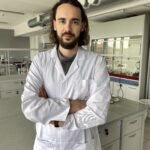
dr inż. Przemysław Zaręba
Principal Investigator in the PoC project. Project manager of the NCBR LIDER project, research and teaching assistant at the Department of Chemical Technology and Environmental Analytics at Cracow University of Technology. His research interests focus on novel pharmacotherapy methods for cancers and central nervous system disorders. He specializes in the design of bioactive compounds using molecular modeling methods and their synthesis.
Dr inż. Przemysław Zaręba led the Preludium project (NCN), which focused on the use of 5-HT6R receptor ligands in the treatment of glioblastomas. He serves as the lead investigator on the partner side in the consortium with Nicolaus Copernicus University in Toruń, in the Opus 26 project (NCN). In 2023, he received a fellowship under the FNP Start program. He has participated as a researcher in two NCBR LIDER projects. In the PoC project, he is responsible for the design and synthesis of biologically active compounds.

dr hab. n. med. Monika Witusik-Perkowska
Currently a research and teaching assistant at the Department of Medical Biochemistry, Medical University of Łódź, previously affiliated with the Department of Molecular Pathology and Neuropathology at the same institution. She has served as principal investigator or lead researcher on several scientific projects funded by the National Science Centre (previously the Ministry of Science and Higher Education) and the Foundation for Polish Science. These projects have resulted in co-authorship of numerous publications in the fields of medical oncology of the central nervous system and neuropathology. Dr hab. Monika Witusik-Perkowska’s current research focuses primarily on studies aimed at analyzing drug resistance in cancers, particularly glioblastoma, and on the search for new anticancer therapies involving synthetic compounds as well as natural substances. These studies are conducted in collaboration with scientific units specializing in the synthesis of new therapeutic molecules, including the Department of Chemical Technology and Environmental Analytics at Cracow University of Technology under the FNP Proof of Concept program. In this project, Dr. Witusik-Perkowska acts as a researcher evaluating the anticancer potential of newly synthesized 5-HT6R ligands using in vitro glioma cell models.
dr n. med. Katarzyna Oszajca
Research and teaching assistant at the Department of Medical Biochemistry, Medical University of Łódź. She served as the principal investigator of an NCN (Opus) project investigating the effect of oxidative stress on the expression levels of metalloproteinases in human aortic smooth muscle cells and was also a recipient of a grant from the Polpharma Scientific Foundation. She has participated as a researcher in other projects funded by the National Science Centre. Her current research interests focus on factors influencing neurodegenerative processes. Dr Katarzyna Oszajca completed postgraduate studies in “Elements of Empirical Research Methodology in Medicine and Applications of Statistics in Biomedical Research” at the Medical University of Łódź. In the Proof of Concept project, she acts as a researcher involved in studying the cytotoxic and anticancer effects of newly synthesized 5-HT6R receptor ligands in glioma cells in vitro.
inż. Julia Kuliś
Synthetic chemist in the Proof of Concept project. She is a second-cycle student in Chemical Technology, specializing in Industrial and Environmental Analytics, at Cracow University of Technology. She gained research experience, among others, in the Preludium (NCN) project, which aimed to develop innovative bioactive compounds with therapeutic potential for the treatment of glioblastoma. She has also participated in projects within FutureLab PK, focusing on discovering new therapeutic strategies for pancreatic cancer and Amyotrophic Lateral Sclerosis. Her research interests include modern pharmacotherapy approaches for oncological and neurodegenerative diseases.
mgr Pola Głowacka
PhD student at the International Doctoral School of the Medical University of Łódź and Laboratory Specialist at the Department of Medical Biochemistry, Medical University of Łódź. Her research interests focus on identifying factors that influence the effectiveness of therapies for neurodegenerative processes and central nervous system cancers, with particular emphasis on the use of synthetic and naturally derived compounds in the treatment of glioblastoma. In the Proof of Concept project, she serves as a researcher involved in studying the cytotoxic and anticancer effects of newly synthesized 5-HT6R ligands in glioma cells in vitro.
20.05.2024 – pressmania.pl
Major Success of Krakow University of Technology Scientists in the Proof of Concept Competition – 4 Projects on the Path to Implementation!


Contact Information
dr inż. Przemysław Zaręba
Main Contractor
Faculty of Chemical Engineering and Technology
Department of Chemical Technology and Environmental Analytics
24 Warszawska Street,
31-155 Kraków, Poland
phone: + 48 12 628 27 07
e-mail: przemyslaw.zareba@pk.edu.pl
Project “New 5-HT6 Receptor Ligands as an Innovative Therapy for Glioma Treatment,” No. FENG.02.07-IP.05-0054/23, funded under the Proof of Concept (PoC FENG) program, project value: PLN 698,880.00

